- A franchise marketing strategy has two jobs at once: build one brand everywhere and fill every location with local customers.
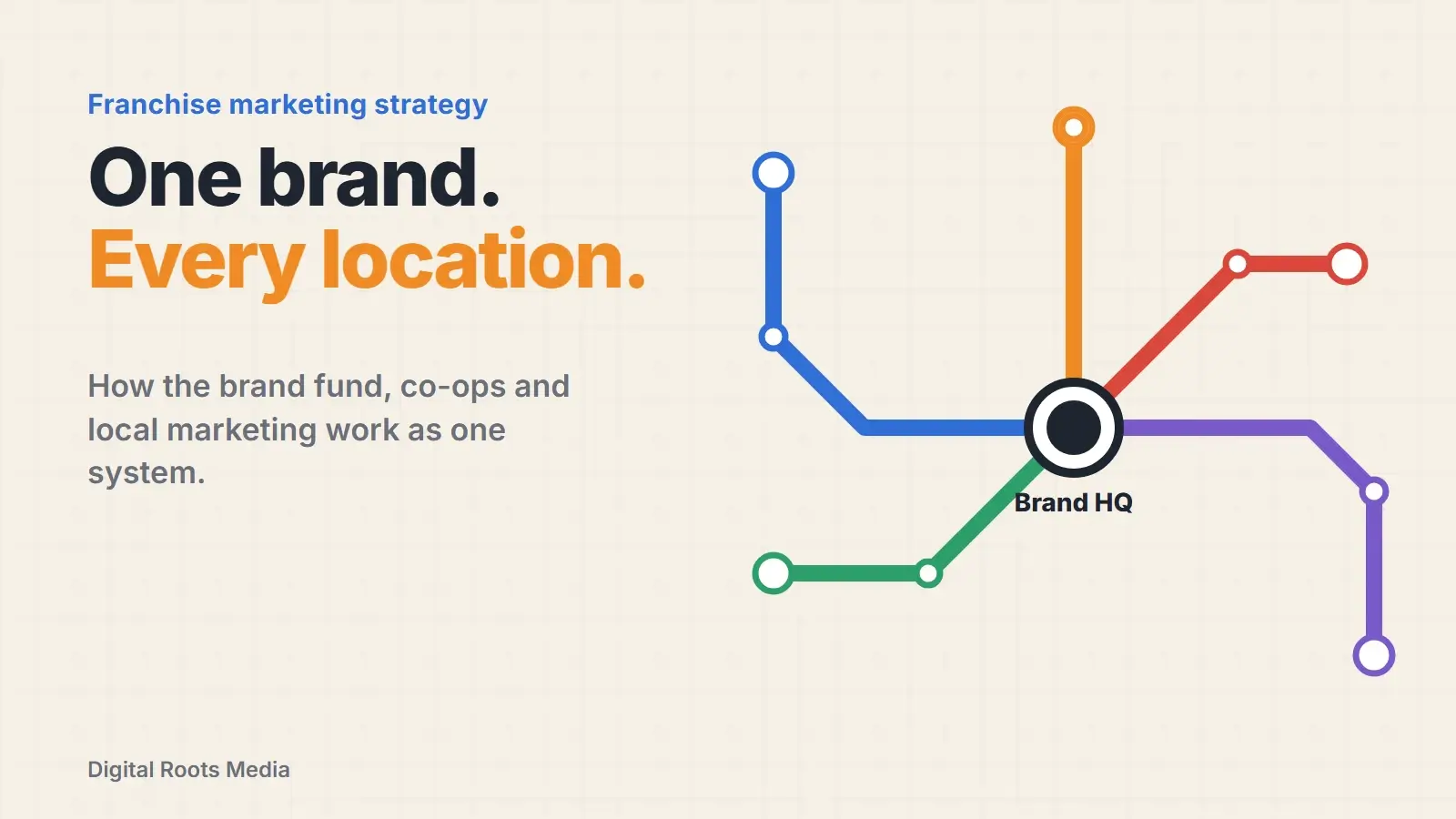
- Most systems use three layers: a brand fund, regional co-ops and local marketing run by each owner.
- In the US, Item 11 of the Franchise Disclosure Document must explain the advertising program, including who pays into the fund, whether it is audited and how it was spent.
- Franchisees stay on brand when the approved route is the easy one: templates, an asset library and fast approvals.
- Measure every location, not just the brand, so each owner can see what their marketing returns.
The short answer: a franchise marketing strategy decides who markets what. The brand fund pays for the work that builds the brand everywhere, regional co-ops buy media for whole markets, and each franchisee runs local marketing inside brand guardrails. Write the split into the franchise agreement, give owners templates they can localize, measure results location by location and report the fund back to the people who pay into it.
Franchise marketing is harder than marketing a single business because two goals pull against each other. Brand work rewards consistency and patience. Local work rewards speed and results an owner can see this month. Most franchise marketing problems come from one goal crowding out the other: a polished national campaign that does nothing for a struggling location, or owners improvising their own ads until the brand looks different in every town. This guide covers the structure that fixes that, the rules that apply in the US, and a franchise marketing plan you can put into practice.
What a Franchise Marketing Strategy Has to Do
An independent business markets one location to one audience. A franchise system markets one brand across many locations, each owned by someone with their own customers, budget and goals. A good franchise marketing strategy has to:
- Make the brand recognizable and trusted in every market it enters.
- Bring local customers to each location, including the new and the struggling ones.
- Keep franchisees on brand without slowing them down.
- Show every owner what their marketing money achieves.
There is also a third audience. Recruiting new franchisees is marketing too, but it sells the franchise opportunity rather than the product. It needs its own message and budget, and, as you will see below, US rules require franchisors to disclose how much of the advertising fund goes into selling franchises.
The Three Layers: Brand Fund, Co-ops and Local Marketing
Most franchise systems organize marketing in three layers. The names vary from brand to brand, but the structure is common:
| Layer | Who usually pays | Who usually decides | Typical work |
|---|---|---|---|
| Brand fund | Every unit, through a contribution set in the franchise agreement | The franchisor, often advised by a council of franchisees | Brand campaigns, the website, creative production, brand search and social |
| Regional co-op | Units in one defined market | The co-op, under rules the franchisor sets | Media that covers a whole market, such as regional TV, radio or paid search |
| Local marketing | Each franchisee | The owner, inside brand standards | Google Business Profile, local ads, community events, reviews, local social |
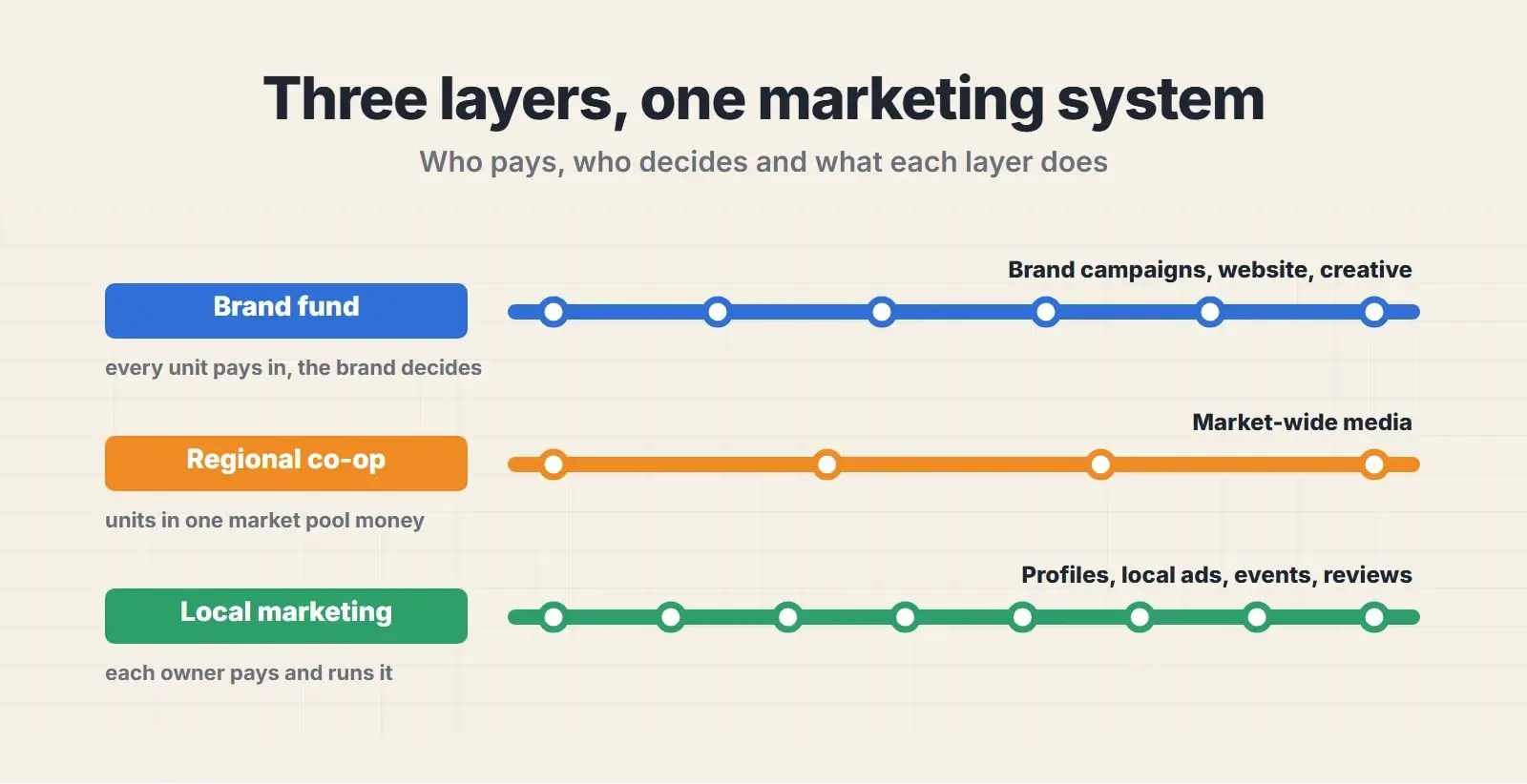
The split between the layers is the most important decision in the whole strategy. It is written into the franchise agreement and disclosed to every prospective franchisee, so it is hard to change once owners have signed. Decide it deliberately, and decide it before the tenth location, not the fiftieth.
The Franchise Marketing Fund: What You Must Disclose
If franchisees pay into a brand or advertising fund, the FTC Franchise Rule requires Item 11 of the Franchise Disclosure Document (FDD) to describe the advertising program. In plain terms, the disclosure has to cover:
- What advertising the franchisor must do, the media it may use, whether coverage is local, regional or national, and who produces it.
- When franchisees may use their own advertising material.
- Whether there is an advertising council of franchisees, how members are chosen and whether it advises or decides.
- Who pays into the fund, how much, and whether company-owned units pay on the same basis.
- Who runs the fund, whether it is audited and when, and whether franchisees can see its financial statements.
- How the fund was spent in the last fiscal year, including the percentages for production, media placement and administration.
- What happens to money not spent in the year, and the percentage, if any, used mainly to sell new franchises.
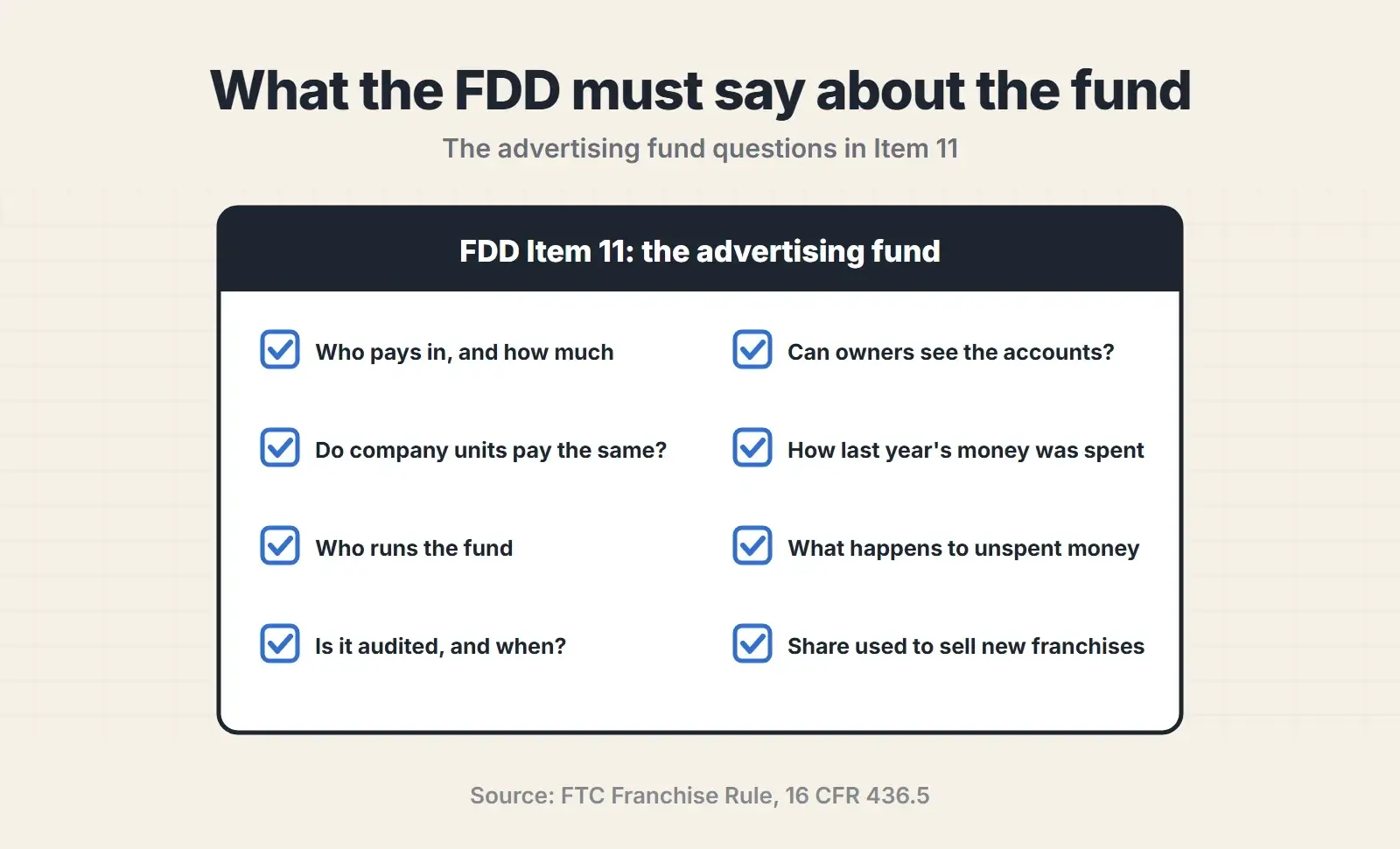
One point is often misunderstood. The rule does not require a franchise marketing fund audit, but the FDD has to say whether the fund is audited and when. Many franchisors report fund spending to owners every year whether or not an audit happens. Owners who can see where their money went are much easier to bring along on the next campaign. This is general information, not legal advice: your franchise attorney should write the Item 11 wording.
Co-ops and advertising councils
Regional co-ops let units in the same market pool money for media no single owner could buy alone. If franchisees must join one, Item 11 has to explain how the co-op’s area is defined, what members contribute, who runs it, whether it works from written governing documents and whether it prepares financial statements owners can review.
An advertising council gives franchisees a formal voice in how brand money is spent. Even an advisory council is worth having. It surfaces problems early, and campaigns that owners helped shape are campaigns they promote in their own locations.
Franchise Local Marketing That Keeps the Brand Intact
Local marketing is where most customers first meet a franchise location, usually on a phone, usually on a map. These are the basics every location should run:
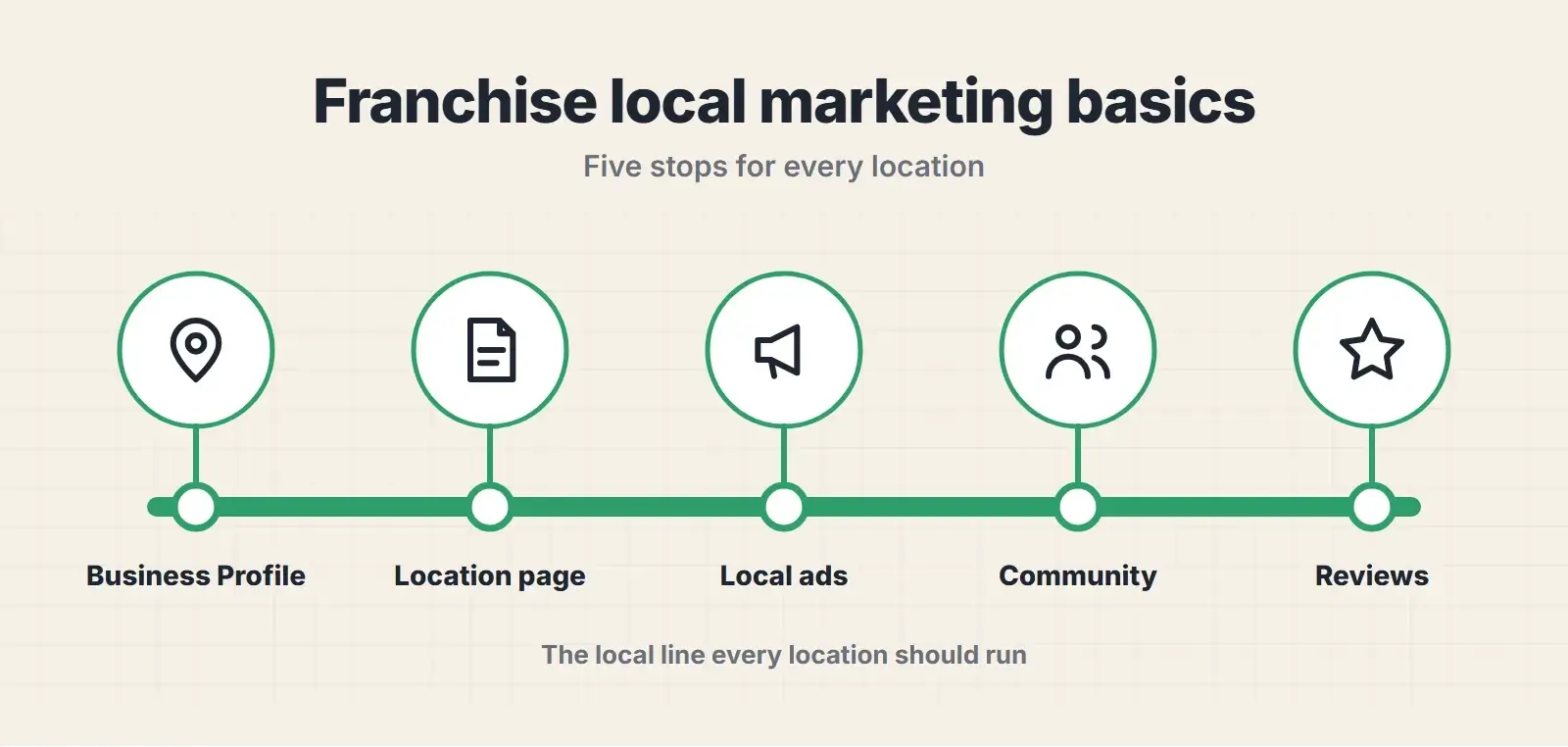
- Google Business Profile. One verified profile per location, with accurate hours, categories, photos and replies to reviews. Google’s guidelines ask businesses to represent themselves as they appear in the real world, on signage and branding, and to keep one profile per business. Our Google Business Profile guide covers the setup.
- A real location page. A page on the brand website for each unit, with its own address, services, team and photos, so local search and local ads have somewhere useful to land.
- Local search and social ads. Built from brand templates, targeted to each territory and reported per location. This is where PPC management and social media marketing at network level pay off.
- Community presence. Sponsorships, events and partnerships that no national campaign can copy.
- Reviews. A steady, honest request after every sale or visit.
For the search side in depth, including location page templates and doorway page risks, read our multi-location SEO guide for franchises.
Franchise marketing ideas owners can run this month
- Post one local photo and one update a week on the location’s Business Profile.
- Partner with one nearby business or school for a co-branded event.
- Run a short local search campaign around the location’s busiest service.
- Send a review request after every completed job or visit, to every customer.
Brand Guardrails Franchisees Will Actually Use
Owners go off brand when the approved route is slower than doing it themselves. Make the right path the easy one:
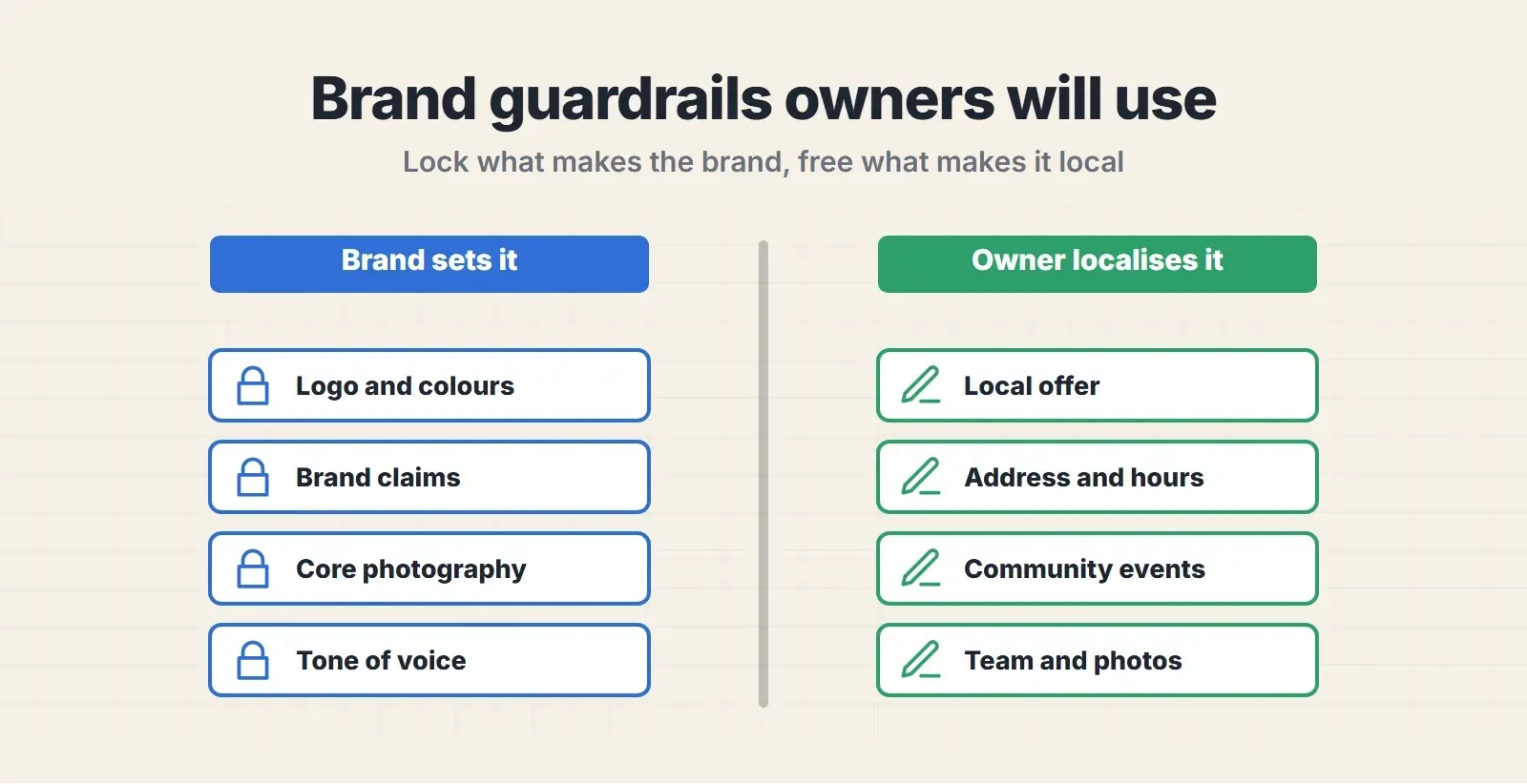
- A shared asset library with current logos, photos, templates and copy owners can localize.
- Clear rules on what can change locally, such as the offer, location details and community content, and what cannot, such as the logo, colours and claims.
- A fast approval path for anything outside the templates, with a promised turnaround.
- Written guidance on when owners may use their own material, matching what Item 11 says.
Guardrails only work if the brand system behind them is solid. If your brand has drifted across locations, a branding refresh is often the fastest way to get everyone back on the same page.
Reviews and Testimonials: The Rules Apply System-Wide
Since 2024, the FTC rule on consumer reviews and testimonials has made several common review practices unlawful in the US. Businesses may not write, create or sell fake reviews, or buy reviews that misrepresent the reviewer or their experience. Offering something in exchange for reviews that express a particular sentiment, positive or negative, is banned, and so are reviews procured from the business’s own officers, managers and employees for third-party sites, along with suppressing negative reviews.
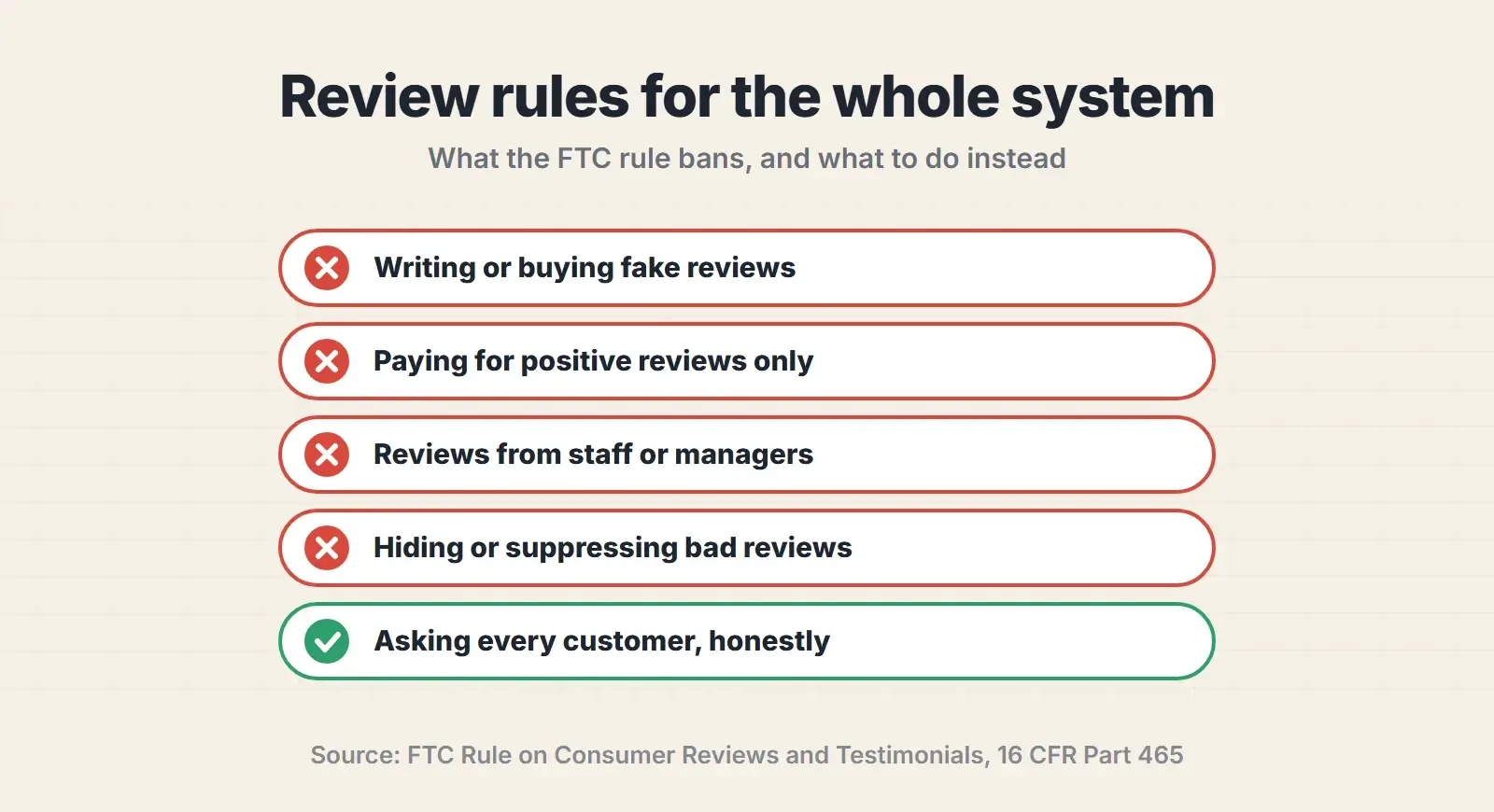
In a franchise system, one owner’s shortcut can become the brand’s problem. Put the review process in the operations manual: ask every customer, never only the happy ones, never pay for a positive review and never post reviews from staff or family.
How to Build a Franchise Marketing Plan
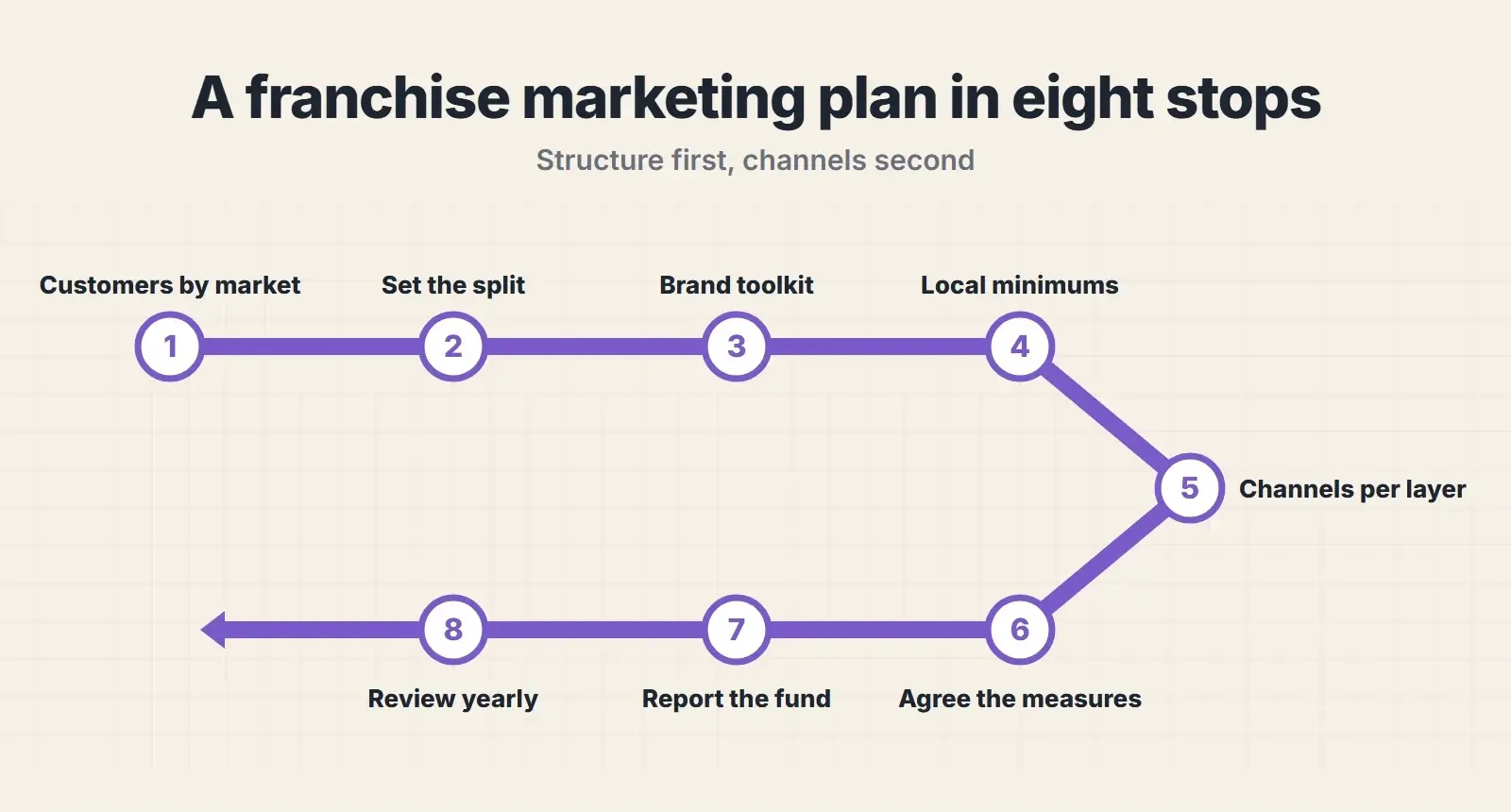
A franchise marketing plan turns the strategy into a calendar and a budget. This is a practical sequence, and it is also the honest answer to how to market a franchise: structure first, channels second.
- Define customers by market. Who buys, how far they travel and how they search. Different territories may need different local tactics.
- Set the split. What the brand fund pays for, what co-ops pay for and what each owner must spend locally, in line with the franchise agreement.
- Build the brand toolkit. Positioning, creative, templates and the asset library, before asking owners to spend.
- Set local minimums. The few things every location must do: a complete Business Profile, a live location page and an honest review process.
- Choose channels per layer. Brand campaigns at the top, market-wide media in co-ops, search, maps and community locally.
- Agree how results are measured. Calls, leads, bookings and sales per location, plus brand reach.
- Report the fund. Show owners how brand money was spent and what it achieved.
- Review once a year. With the advisory council, adjust the split and the channels based on what worked.
If you are still at the stage before any of this, turning a successful business into a franchise system with its FDD, operations manual and launch plan, that is franchise development work. Specialist firms such as Fransion focus on that stage, and it is worth getting right before the marketing starts.
Measure by Location, Report to Every Owner
Brand-level numbers hide what is happening in each market. Track results for every location as well as for the whole system: calls, direction requests, form leads, bookings and the cost of each. Owners who can see their own results are more willing to fund brand campaigns, and head office can spot locations that need help before sales fall. Our analytics and reporting work is built around exactly that kind of per-location view.
Marketing a multi-location brand?
Our franchise SEO work starts with a network audit, builds a location page template and review process, rolls out profiles and pages market by market, and reports calls, leads and rankings for every location.
Franchise Marketing FAQ
What is a franchise marketing strategy?
It is the plan for who markets what across a franchise system. It sets what the brand fund pays for, what regional co-ops do and what each franchisee must do locally, along with brand guardrails, the channels for each layer and how results are measured by location and reported to owners.
What is a franchise marketing fund?
A brand or advertising fund is money franchisees pay in, usually as a contribution set in the franchise agreement, to pay for marketing that benefits the whole brand. In the US, Item 11 of the FDD must explain who contributes, who runs the fund, whether it is audited and how it was spent.
Does a franchise marketing fund have to be audited?
The FTC Franchise Rule does not require an audit, but the FDD must say whether the fund is audited and when, and whether franchisees can review its financial statements. Many franchisors share yearly spending reports anyway. Ask your franchise attorney what fits your system.
How should a franchise split brand and local marketing?
There is no single right split. Brand funds usually pay for creative, the website and brand campaigns, while owners pay for local search, maps, events and reviews. Base the split on what each market needs, write it into the franchise agreement and review it with franchisees every year.
How do you market a franchise location locally?
Start with a complete Google Business Profile and a real location page, then add local search and social ads built from brand templates, community events and an honest review request after every sale. Track calls, leads and bookings for that location so the owner sees what works.
Final Thoughts
The best franchise marketing strategy is not the one with the most channels. It is the one where every owner knows what the brand handles, what they handle and how both will be measured. Get the three layers right, give franchisees guardrails they want to use, keep reviews honest and report the fund openly, and each new location starts on a network that already works. If local search is where your locations need the most help, start with local SEO for each market, or talk to us about franchise SEO across the whole network.