Free Website AuditSee exactly what is holding your site back from ranking and converting. Claim yours →
Free Website AuditClaim yours →
Food manufacturer website design
Retail buyers, distributors and brands looking for a co-packer vet manufacturers online before they ask for samples. They want capabilities, certifications, capacity and specs. Our food manufacturer website design puts those facts in front of them, with product catalogs, spec sheets, private label and co-packing pages and inquiry forms that reach the right person.
We review your current site and send a fixed-price proposal. No obligation.
Shelf stable sauce, 20k units
Retail buyer, 12 oz SKU




In Short
A great food manufacturer website gives B2B buyers the facts they need to shortlist you. It shows capabilities, product categories, packaging formats and capacity, lists certifications such as SQF, BRCGS, organic, kosher, halal and non-GMO with current audit status, offers downloadable spec sheets, and has separate paths for retail buyers, foodservice, private label clients and co-packing brands, each with an inquiry form. It ranks for searches like “co-packer for sauces” and “private label snack manufacturer”.
Reviewed by Chris C., Web Design & Development
Strategists, designers, copywriters and developers plan every capability page, certification and inquiry path around how buyers qualify suppliers.
Your site runs on the world’s most widely used platform, tuned for speed and local search, and easy for your sales and quality team to update without calling a developer.
Your company owns the design, content, domain and hosting, and receives every login at launch. After that, help is there when you want it.
How customers choose
Food buyers carry real risk when they add a supplier, so they qualify manufacturers carefully online first.
“Co-packer for beverages”, “private label granola” or “gluten free bakery manufacturer”.
GFSI certification, audit scores, allergen controls and recall history matter before anything else.
Product formats, minimum runs, packaging, lead times and distribution reach.
An inquiry to sales or business development, often with specs attached.
Checklist
Twelve features a food manufacturing website needs to win qualified B2B inquiries. Compare your current site to them.
Learn what buyers check before they request samples, plus how a manufacturer site is priced.
Site plan
Each page answers what a buyer or brand needs to qualify you, then routes their inquiry to the right team.
Your branded or catalog products by category, with spec sheets, pack sizes and shelf life.
Capabilities, formats, minimum runs, R&D support and how onboarding works for brands.
What retailers and distributors can source under their own label, and the process.
Certifications, audit status, HACCP and FSMA programs, allergen controls and traceability.
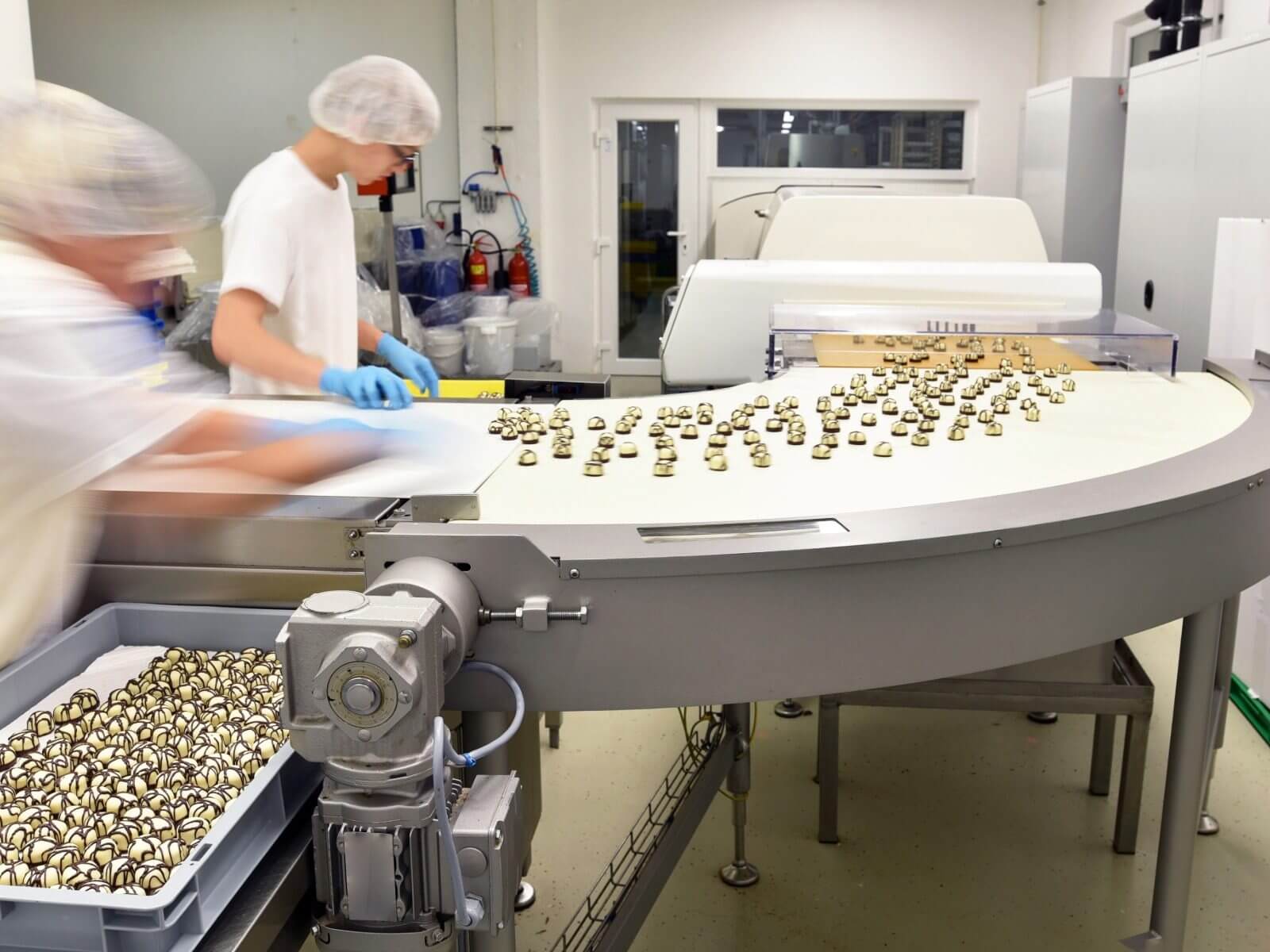
Plants, lines, capacity, cold chain and warehousing, shown with real images.
Separate forms for retail, foodservice, co-packing and private label inquiries.
Our process
Watch your new company website take shape, one step at a time. You see real work at every stage, get weekly updates and approve each step before we move on.
We learn your capabilities, buyers and certifications, and study the manufacturers buyers compare.
We plan products, co-packing, private label and quality pages for each buyer type.
Credible pages from your real plants and lines, with capability copy your quality team approves.
A WordPress build with a catalog, spec sheet library and inquiry forms routed by buyer type.
Each inquiry form is tested to reach the right inbox, claims are reviewed and we launch.
Your team learns to update products and certificates, and we bring in more qualified inquiries.
Free quote
A fixed build price is agreed in writing up front, and B2B search, ads or content programs are quoted monthly.
Beyond the website
Food buyers and brand owners research quietly for a long time. Four channels make sure they find you while they do. A care plan keeps certificates, spec sheets and inquiry routing current.
Select a strategy below to see what we do.
Brands search by product type and capability, such as “hot fill co-packer” or “organic snack bar manufacturer”. Capability pages built around those searches bring in inquiries from companies you have never met.
Pro tip: Create a page for each process you run, such as hot fill, retort or cold pressed. Brands search for the process first.
Searches like “co-packer near me” or “private label coffee manufacturer” come from brands with a launch date in mind. Sending each click to the exact capability page, with an inquiry form beside it, produces qualified leads.
Pro tip: Ask for estimated annual volume on your co-packing form. It qualifies leads before your team spends time on them.
Emerging brands have many questions about minimums, formulation and scaling. Clear guides on those topics position you as the manufacturer that makes the process easier.
Pro tip: Write a plain guide to your onboarding steps for new brands. It shortens sales calls and answers the first ten questions.
Buyers ask AI assistants “Which co-packers handle gluten free baked goods?” Clear capability, certification and format pages help those tools name your company accurately.
Pro tip: List certifications as text with the certifying body, not only as logos. AI tools and buyers both need to read them.
Certificates renew each year, SKUs change and sales territories shift. Besides patches, backups and monitoring, we swap expiring certificates, update spec sheets and adjust inquiry routing when your team changes.
Pro tip: Add every certificate’s renewal date to a shared calendar and update the website the week the new one arrives.
Built for food manufacturers
Food manufacturer websites make claims buyers and regulators check, so certifications and product claims are presented carefully.
Your regulatory and quality teams approve product and certification claims. We set up the pages for their sign-off, and this is not regulatory advice.
SQF, BRCGS, organic, kosher, halal and non-GMO marks appear only while certified, with the certifying body named.
Nutrient, health and “natural” or organic claims follow FDA and USDA labeling rules, so product copy avoids unsupported claims.
Food safety programs are described accurately, without implying certifications or audit results you do not have.
Co-packing clients appear only with permission, and formulations are never shown.
Client reviews
Google reviews from our website design clients (not food manufacturers).
“The best website design company! They are responsive, helpful and a pleasure to work with.”
Google review
“…They captured every aspect we envisioned flawlessly. Extremely creative team and We thank for all their hard work!”
Google review
“Digital Roots Media did an amazing job in designing and launching our new website. Great team. Great experience. We are continuing to do maintenance with them and plan to use them for future projects as well.”
Google review
Food manufacturing guides
Practical guides from our team on the topics clients ask us about most.
FAQs
Straight answers to the questions business owners ask most.
Talk to a strategist. No sales script, just straight answers about your site.
Food manufacturer websites from Digital Roots Media are quoted per project, set as one fixed price in writing. It depends on:
A co-packer website should list capabilities and formats, minimum runs, R&D and formulation support, certifications, facility capacity, the onboarding process for new brands and an inquiry form that asks for product type and volume.
Private label food manufacturer pages speak to retailers and distributors, covering product ranges available under their label, packaging options, minimums and the approval process.
Many manufacturers post basic spec sheets publicly and keep detailed documents behind a simple request form. That balances buyer convenience with confidentiality.
Yes. Food and beverage website design for B2B focuses on capabilities, certifications, specs and inquiries, while consumer brand sites focus on recipes, stores and online sales.
Yes. We list each certification with the certifying body and current status, and link certificates if you want them public.
A food manufacturing website generates leads through capability pages that rank for buyer searches, clear certifications and specs that build trust, and inquiry forms routed to the right sales contact.
Yes. The domain, pages, documents and images all belong to your company, with every admin login handed over.
Talk to a strategist. No sales script, just straight answers about your site.
Keep exploring