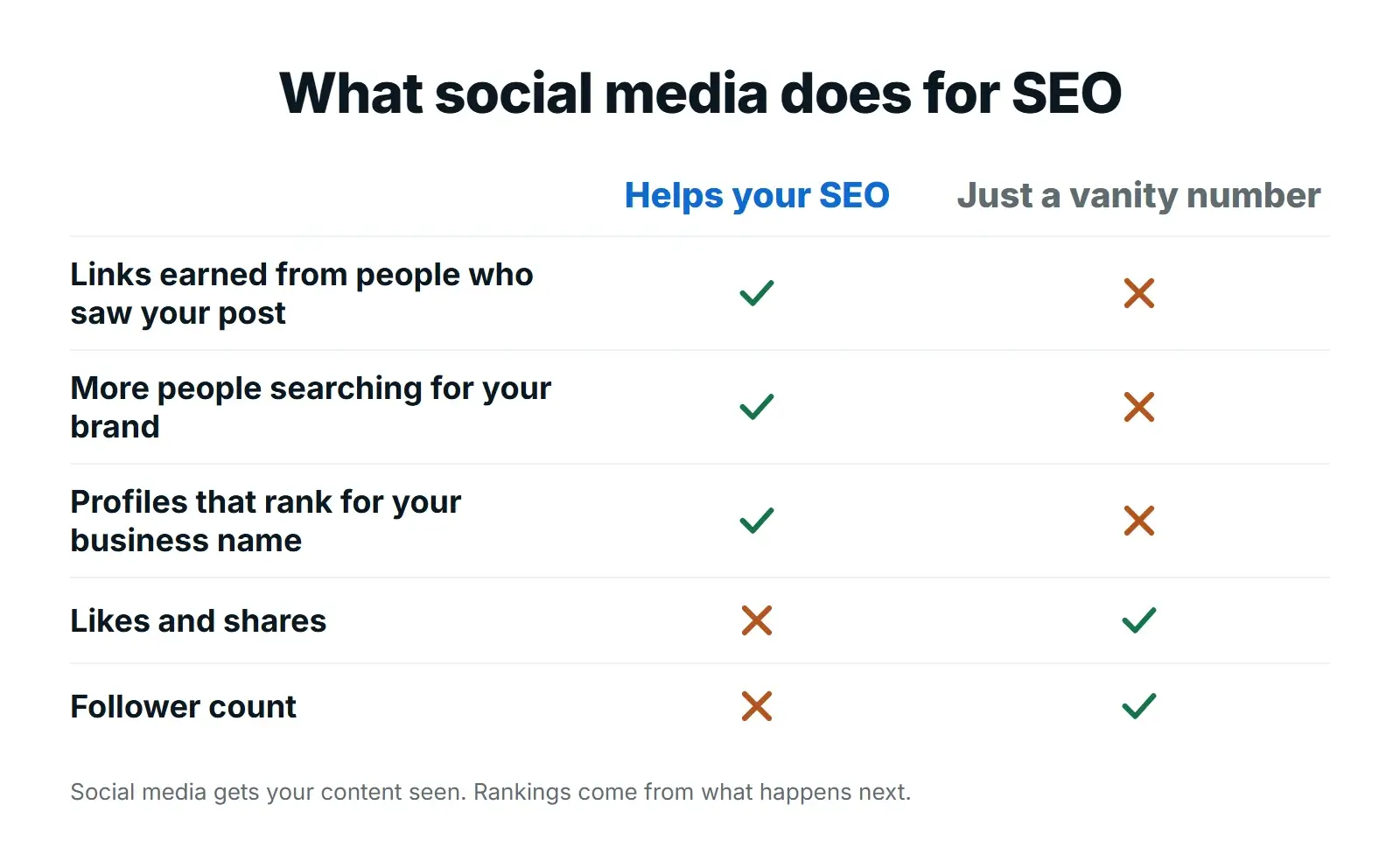
Social media and SEO work together, but not in the way many guides claim. Likes, shares and follower counts do not raise your Google rankings directly. What social media does is put your content in front of people, and some of those people link to it, search for your brand, contact you or become customers. Used well, social media speeds up the things that do help SEO. Used badly, it wastes hours on vanity numbers.
- Google has said for years that social signals such as likes, shares and follower counts are not ranking factors.
- Links on most social platforms carry nofollow or ugc attributes, which Google treats as hints rather than votes.
- The SEO value of social media is indirect: discovery, earned links and mentions, branded searches and profiles that rank for your name.
- Measure social by referral visits, enquiries and branded search growth, not by engagement alone.
Does social media affect Google rankings?
Not directly. Google’s search team has repeatedly said that it does not use social signals like likes, shares or follower counts in its ranking systems. Those numbers are easy to buy or fake, and Google cannot see most of them anyway, because much of what happens on social platforms is behind logins.
Links are also treated differently. Most social networks add rel="nofollow" or rel="ugc" to links in posts and profiles. Google’s guidance on qualifying outbound links explains that it treats these attributes as hints, so a link in a post is not the same as an editorial link from another website.
Google’s own SEO starter guide does recommend promoting your site, including on social media, because that is how people find new content and decide whether to link to it or mention it. That is the real connection between social media and SEO.
How social media supports SEO
1. Discovery that leads to links and mentions
A useful guide shared on LinkedIn may be read by a journalist, a supplier or an industry blogger. If they cite it on their own site, that editorial link does count. Social media cannot create links for you, but it puts your best content where people who publish links will see it.
2. More people searching for your brand
When people keep seeing your name, more of them search for it later. Branded searches tend to convert well, and a business that people actively look for is easier for search engines to understand as a real entity.
3. Profiles that rank for your business name
Active social profiles often appear on the first page when someone searches for your business. That gives you more control over what people see. You can help Google connect those profiles to your website with Organization structured data and its sameAs property, which lists your official profiles.
4. Better topics for your content
Comments, direct messages and replies are full of the questions customers really ask. Those questions make strong blog topics and FAQ answers, because they use your customers’ own words.
5. Video that can appear in Google results
YouTube is a search engine in its own right, and videos can also appear in Google’s video results. Google’s video best practices explain how to help it find and understand videos, including on your own pages. Our YouTube SEO guide covers titles, descriptions and chapters in detail.
What each platform is good for
| Platform | What it does for SEO | Best use for a small business |
|---|---|---|
| Reaches people who write, publish and link in your industry | Share guides and opinions from named people at your company | |
| Local word of mouth and referral visits | Share helpful local posts, events and offers | |
| Brand recognition and branded searches | Show your work, team and results with clear captions | |
| YouTube | Video results and a second search engine | Answer common customer questions on camera |
| X | Fast reach to journalists and industry voices | Share timely commentary and new research |
What to avoid
- Buying followers or engagement. It does nothing for rankings and makes your profiles look less trustworthy to real people.
- Dropping links in comments and groups. Mass link posting is link spam under Google’s spam policies, and it annoys the communities you want to reach.
- Posting the same text everywhere. Each platform has its own audience and format; copy and paste posts get ignored.
- Judging success by likes. A post with few likes that brings three enquiries beats a viral post that brings none.
A simple weekly routine
- Share each new guide or service update once, with a short summary of why it matters to your customers.
- Reuse the best part of an older guide as a tip, chart or short video, linking back to the full page.
- Reply to comments and messages, and note every question you could answer on your website.
- Tag the people or businesses you mention when it is genuinely relevant.
- Check which posts sent visits and enquiries, and do more of what worked.
How to measure it
Add UTM tags to the links you share so you can see social visits and enquiries in Google Analytics. Our guide to UTM parameters shows how. In Google Search Console, watch searches for your brand name over time, and keep a simple list of new links and mentions that came from people who found you on social media.
If you want social media that supports your search visibility instead of chasing likes, our social media marketing and SEO services teams work from the same plan. Request a free proposal.
Frequently asked questions
Are social signals a Google ranking factor?
No. Google has said that likes, shares and follower counts are not used in its ranking systems. Social media helps SEO indirectly, by getting content seen by people who may link to it, mention it or search for your brand later.
Do links from social media help SEO?
Not much on their own. Most platforms mark links as nofollow or ugc, which Google treats as hints. Their value is the visits they send and the chance that someone who sees your content links to it from their own website.
Should I share every blog post on social media?
Share the posts your followers would find useful, with a short note on why. Quality matters more than volume, and resharing strong older guides is often better than posting something weak just to be active.
Does YouTube help with Google rankings?
A YouTube video does not boost your website’s rankings directly, but videos can appear in Google’s video results and YouTube search, which gives you more ways to be found for the same questions.